
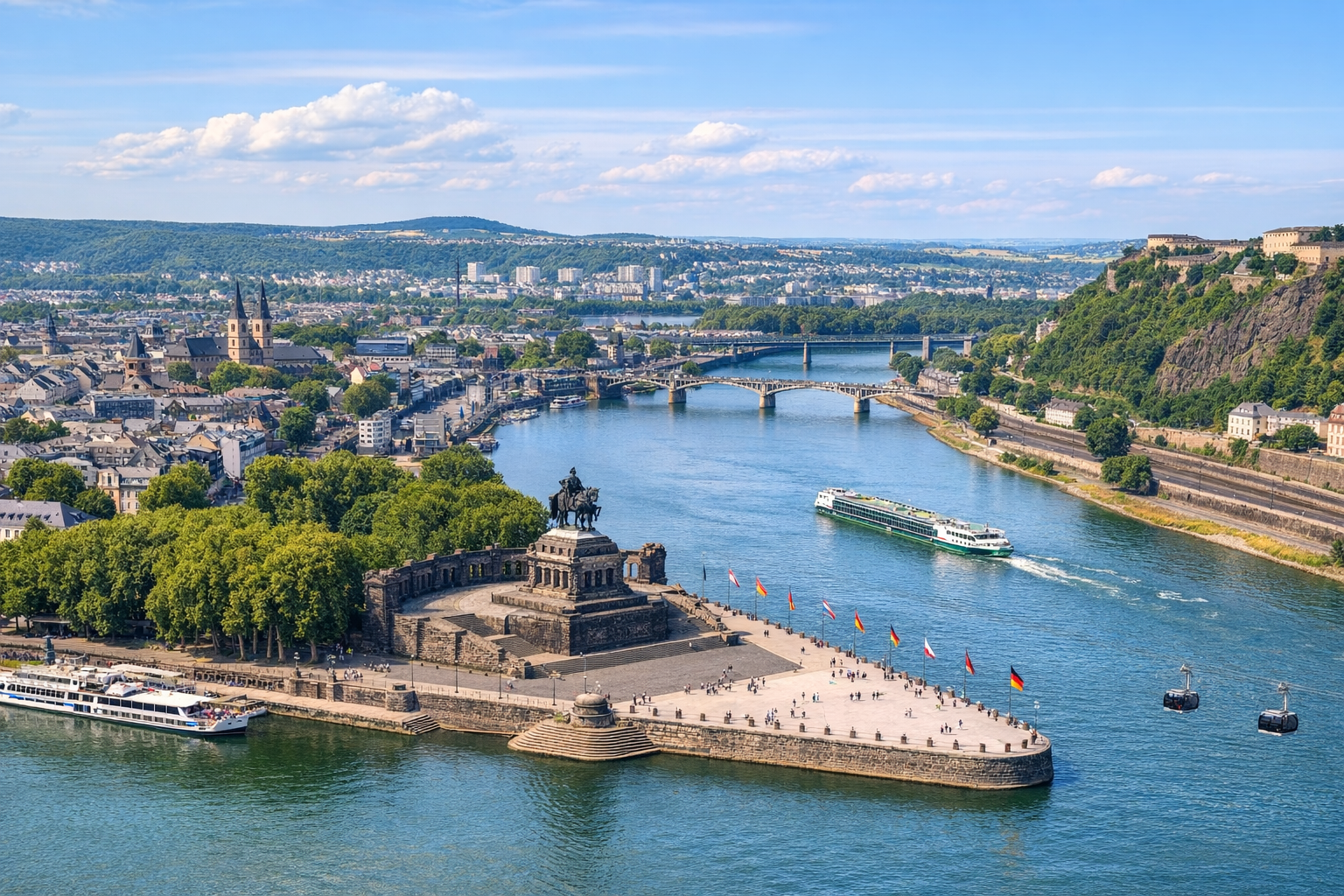
Koblenz in Rhineland-Palatinate – Where history meets modern living.
Rhineland-Palatinate (Rheinland-Pfalz) – a region defined by rivers, history and quality of life – is located in western Germany and forms a natural bridge between several German states as well as France and Luxembourg. The state capital is Mainz. Over centuries, the region has developed at the crossroads of European trade routes, shaped by its rivers, landscapes, and long-standing cultural traditions.
The Rhine and the Moselle play a central role in the character of the region, influencing not only its geography but also daily life, settlement patterns, and cultural heritage.
Koblenz and the Surrounding Region
Koblenz is one of Germany’s oldest cities and is located where the Rhine and Moselle rivers meet at the Deutsches Eck. This unique setting has made the city an important regional center throughout history. Today, Koblenz combines historic buildings, riverside promenades, and modern infrastructure in a compact and accessible urban environment.
Its central location allows easy access to major cities such as Cologne, Bonn, and Frankfurt, while daily life in Koblenz remains calmer and more manageable than in larger metropolitan areas. The surrounding region offers a mix of urban neighborhoods, smaller towns, and natural landscapes, creating a varied living environment.
Upper Middle Rhine Valley – UNESCO World Heritage Site
Koblenz lies at the northern gateway to the Upper Middle Rhine Valley (Oberes Mittelrheintal), a cultural landscape recognized as a UNESCO World Heritage Site. Along this stretch of the Rhine, castles rise above the river, vineyards shape the hillsides, and historic towns reflect centuries of European history.
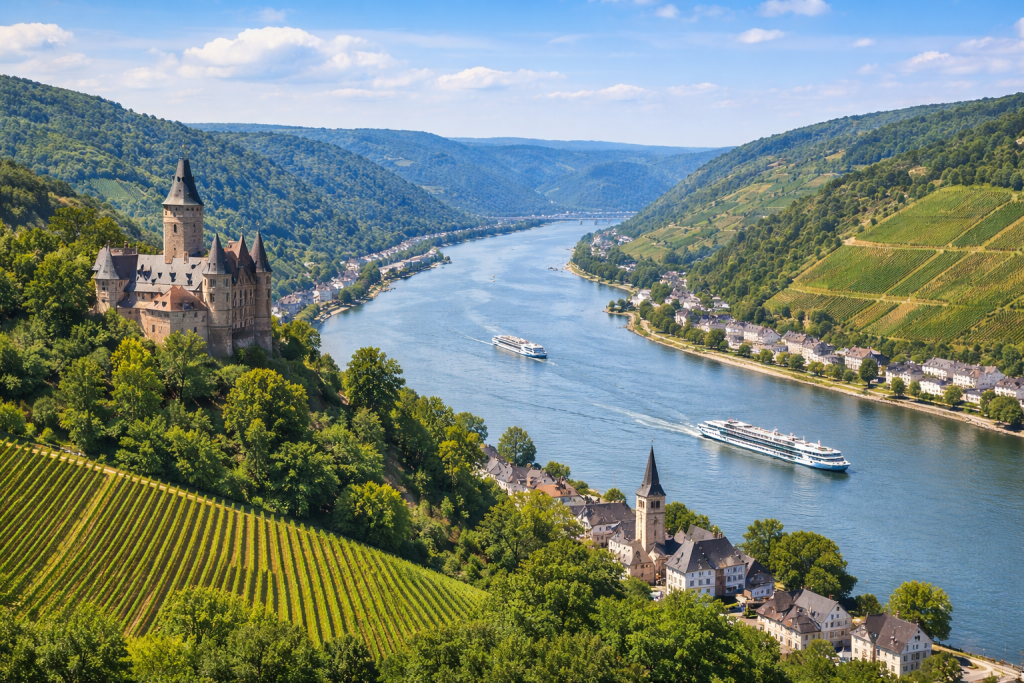
The Upper Middle Rhine Valley is valued not only for its cultural significance but also for its distinctive atmosphere. The combination of preserved heritage, natural scenery, and lived-in communities gives the region a character that continues to attract residents and visitors alike.
Culture, Landscape, and Everyday Life
Rhineland-Palatinate offers a diverse environment in which history and daily life coexist naturally. The region includes:
- Historic castles, fortresses, and town centers
- Roman and medieval heritage sites
- Well-established wine-growing areas along the Rhine and Moselle
- Forests, hills, and nature parks close to residential areas
Cultural institutions, local festivals, and regional traditions contribute to a sense of continuity and community, while the surrounding landscapes offer space for recreation and relaxation.
Cultural Events and Regional Traditions
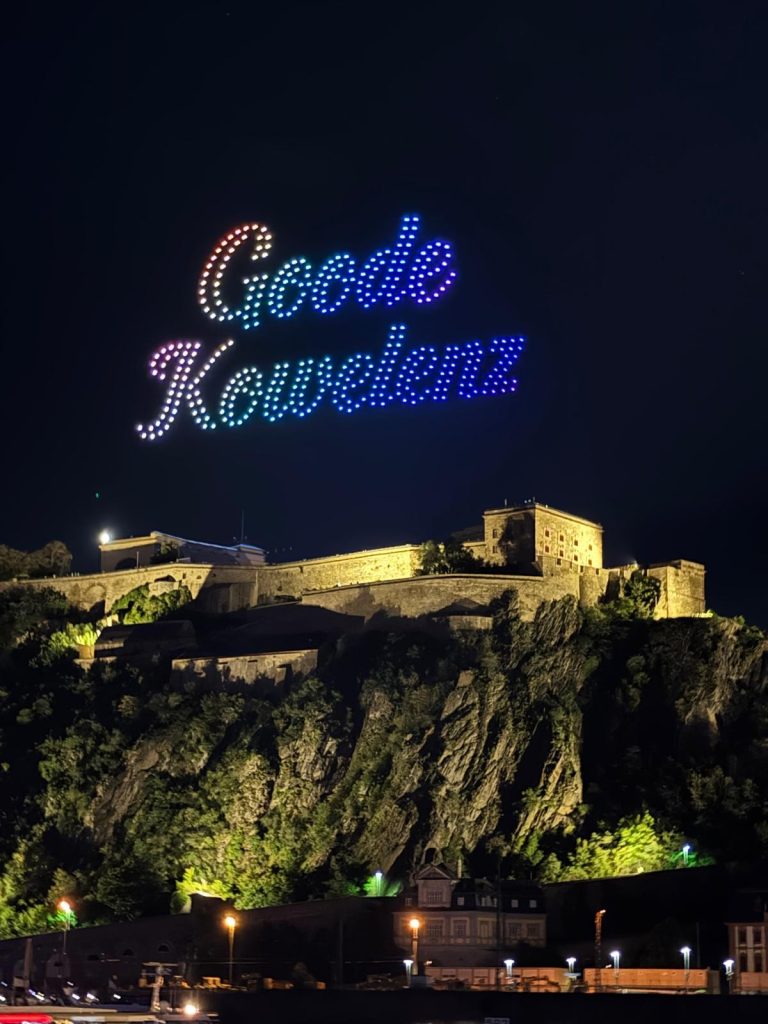
Cultural life in and around Koblenz is shaped by a variety of festivals and long-standing traditions throughout the year. One of the most prominent events is the Karneval (carnival season), which is widely celebrated across the Rhineland with parades, costumes, and local festivities. In Koblenz, the traditional carnival greeting “Kowelenz Olau” reflects the city’s strong connection to this regional custom. Another well-known event is “Rhein in Flammen” (Rhine in Flames), during which the river landscape is illuminated by coordinated fireworks, light installations, and ship convoys along the Rhine. In addition to these larger events, numerous local wine festivals, markets, and cultural gatherings take place in towns and villages throughout the region, reflecting the strong regional identity and community life of Rhineland-Palatinate.
Working and Living in the Region
Rhineland-Palatinate provides a balanced setting for living and working. Economic activity is spread across regional centers such as Mainz, Ludwigshafen, and Koblenz, as well as smaller cities and towns. This decentralized structure allows professional opportunities to coexist with shorter commuting distances and varied residential options.
Housing costs in many parts of the region are moderate compared to larger metropolitan areas. Public transportation, healthcare services, and educational institutions are widely available and well integrated into everyday life, supporting long-term settlement for individuals and families.
How do foreign doctors and dentists describe their working life in Koblenz? The daily routine largely depends on the specific working environment. Employment in a private practice is typically associated with regular working hours, often from 8 a.m. to 5 p.m., sometimes including home visits. In contrast, working in hospitals may involve night shifts or 24-hour duties. While this can result in a higher workload, it is often accompanied by additional salary components.
A Region to Settle and Belong
Rhineland-Palatinate is a region shaped by continuity rather than rapid change. Its combination of cultural heritage, natural landscapes, and reliable infrastructure creates an environment in which people can establish themselves over time. With Koblenz located at the heart of the UNESCO-listed Upper Middle Rhine Valley, the region represents a place where history, nature, and modern living come together in a distinctive and enduring way.
Language Training and Professional Preparation
Located in Koblenz, the ISL Sprachschule is a language training institution licensed by the Federal Office for Migration and Refugees (BAMF) and specializes in German language programs for healthcare professionals. International doctors, dentists, and pharmacists are prepared for the linguistic and professional requirements of working in Germany, including examinations such as the Fachsprachenprüfung (FSP).
The courses are taught by experienced language instructors and are complemented by contributions from medical, dental, and pharmaceutical professionals, who share practical insights into their daily work. Training includes the simulation of realistic FSP examination scenario. Participation in these language programs may be funded through BAMF. The language courses are complemented by accommodation options in Koblenz for international participants.
Further information about the ISL medical program is available on the website:
or via email at: medical@isl-sprachschule.de